The Big Idea
For over a century, modern society has relied heavily on fossil fuels like coal, oil, and natural gas to generate electricity. However, burning fossil fuels releases carbon emissions that harm the environment and warm our planet. In addition, fossil fuel supplies are limited and will eventually run out. Today, scientists and engineers are shifting the world toward renewable energy—clean power sources that naturally replenish themselves.
How It Works
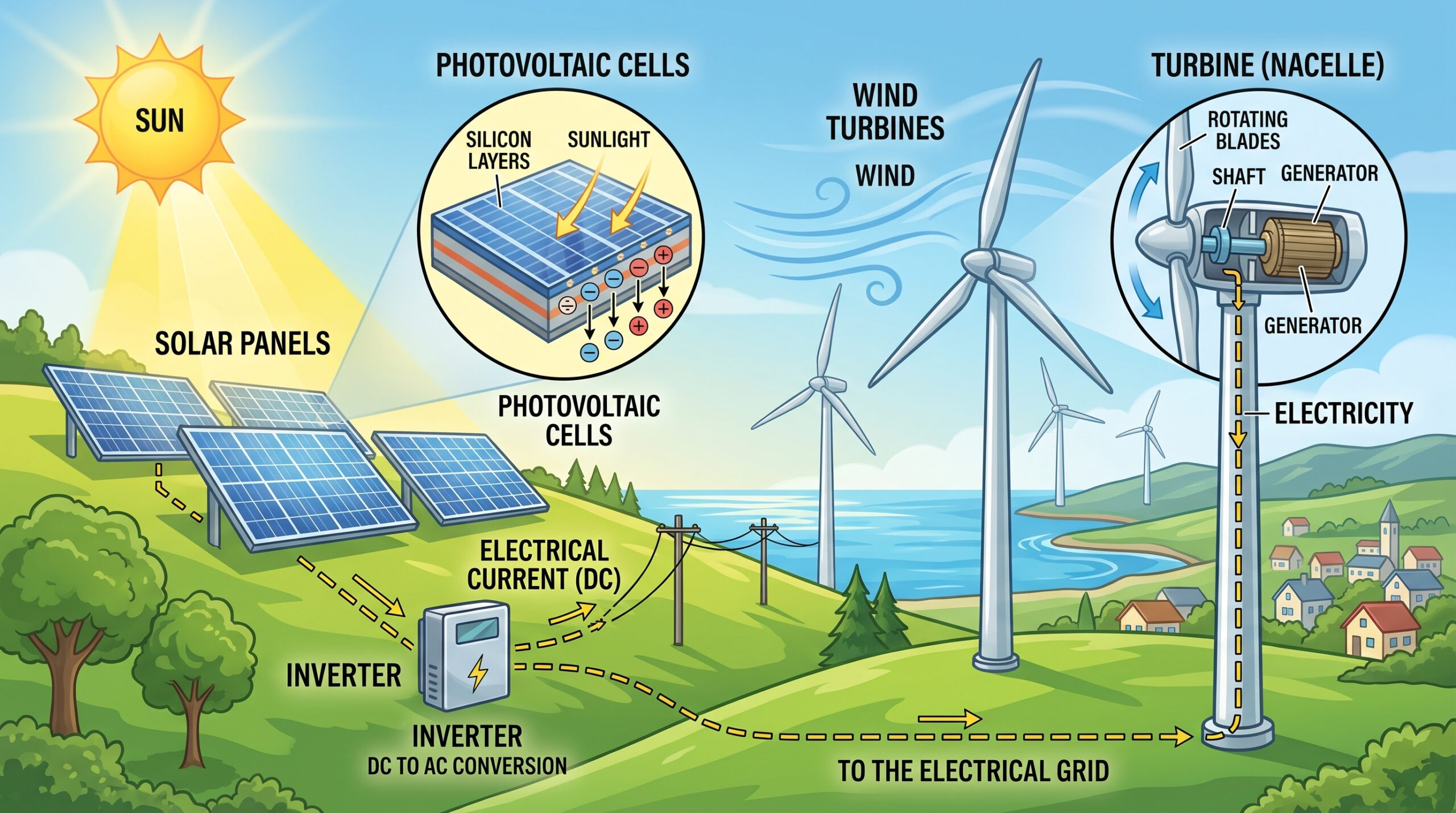
Two of the most popular forms of renewable energy are solar power and wind energy. Solar energy captures light from the sun using photovoltaic solar panels. These panels are made from thin layers of semiconductor materials, usually silicon. When sunlight hits the silicon atoms, it knocks electrons free, creating a steady flow of electrical current. This direct current is converted by an inverter into household electricity to power lamps, computers, and refrigerators.
Wind energy works on a simple mechanical principle. The sun heats different parts of the Earth unevenly, creating moving air currents that we call wind. Engineers build tall wind turbines in windy areas or offshore in the sea. As the wind blows, it pushes large aerodynamic blades. These rotating blades turn an internal shaft, which spins an electrical generator inside the turbine nacelle, producing clean electricity.
Why It Matters
Renewable energy produces zero air pollution during operation and uses resources that will never disappear. As engineering improves, solar panels and wind turbines are becoming cheaper and more efficient, creating cleaner air and sustainable power for future generations.
Key Vocabulary
- Photovoltaic: Technology that directly converts sunlight into electrical energy.
- Renewable: A resource that is replaced naturally and cannot be used up completely.
- Turbine: A machine with turning blades that generates mechanical or electrical power.