The Big Idea
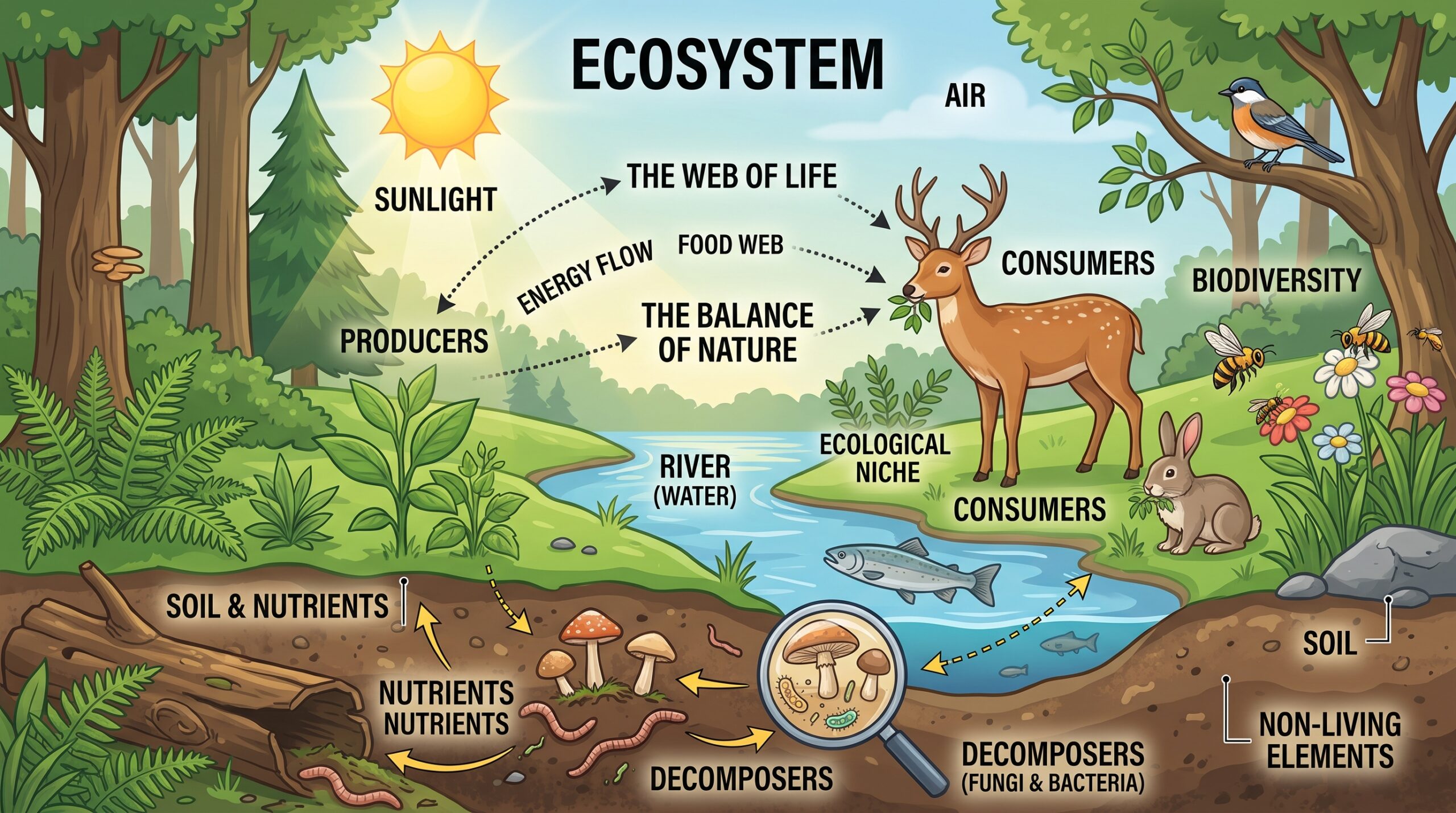
An ecosystem is a community where living organisms, such as plants, animals, and bacteria, interact with non-living elements like water, soil, air, and rocks. Ecosystems can be as vast as a tropical rainforest or as small as a puddle under a rock. The secret to a healthy and resilient ecosystem is biodiversity—the rich variety of different living species sharing the same environment.
How It Works
Every organism within an ecosystem has a specific job, known as its ecological niche. Green plants and algae are producers because they create food from sunlight. Animals are consumers because they must eat plants or other animals to survive. When plants and animals die, decomposers like fungi, earthworms, and bacteria break down their bodies into basic nutrients, returning minerals back to the soil so new plants can grow.
When an ecosystem has high biodiversity, it functions like a well-built net. If one species experiences a disease or population drop, other species can step in to fill the role. For example, if one type of flowering plant suffers from a drought, bees and butterflies can still feed on other flowers. However, when humans remove forests, pollute waters, or introduce foreign invasive species, that web breaks, putting the entire habitat in danger.
Why It Matters
Healthy ecosystems provide humans with clean water, fertile agricultural soil, medicine, and climate regulation. Ecologists study biodiversity patterns using satellite imagery and environmental data to help design wildlife reserves and protect endangered species from extinction.
Key Vocabulary
- Biodiversity: The variety of different plant and animal species in an environment.
- Decomposer: An organism that breaks down dead organic material into soil nutrients.
- Niche: The specific role, function, or job an organism has in its ecosystem.