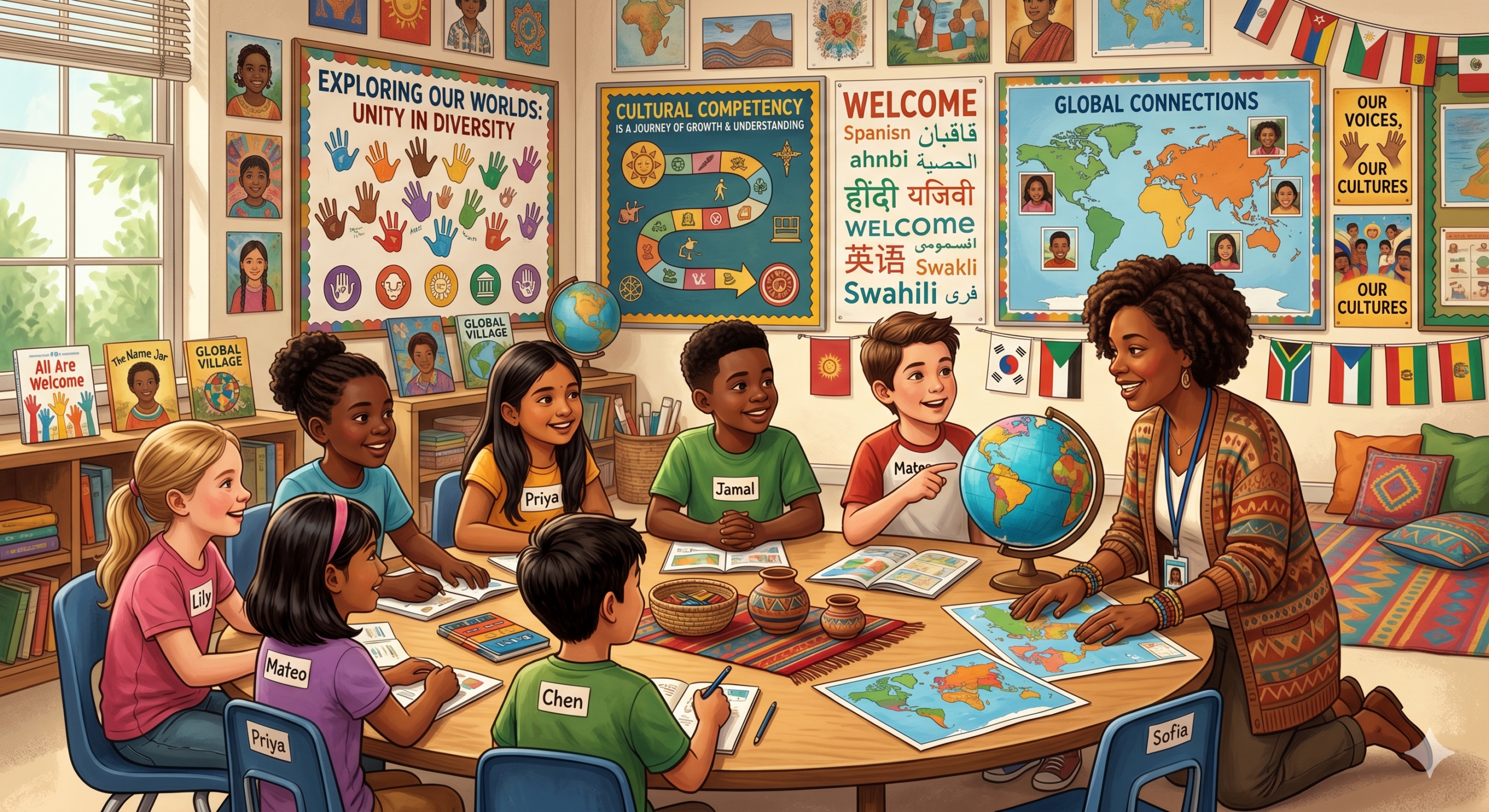
Cultural competency in education is not a destination or a checklist; it is an ongoing, reflective process of developing the knowledge, skills, and attitudes necessary to interact effectively with students, families, and colleagues from diverse cultural backgrounds. It requires shifting from a “colorblind” approach to one that actively acknowledges and values the cultural identities that shape every learner’s experience.
1. The Dimensions of Cultural Competency
To lead a truly inclusive classroom, educators must navigate three interconnected dimensions of cultural competency:
- Self-Awareness: The critical first step is examining your own cultural lens—your biases, assumptions, and privileges—to understand how they influence your teaching decisions.
- Cultural Knowledge: This involves actively learning about the histories, traditions, and values of the communities you serve, moving beyond superficial stereotypes.
- Inclusive Pedagogy: This is the practical application of your awareness and knowledge, ensuring your curriculum, classroom environment, and assessment practices are culturally sustaining.
2. Practical Strategies for the Classroom
| Strategy | Implementation Tip |
| Asset-Based Framing | Instead of focusing on what students “lack” based on dominant standards, identify the cultural strengths and experiences they bring to the classroom. |
| Diverse Representation | Regularly audit your teaching materials—books, examples, and guest speakers—to ensure they reflect the diversity of your students and the wider world. |
| Critical Reflection | Set aside time to reflect on your interactions: “Did I make an assumption about this student based on their background?” |
| Family Partnerships | Actively seek input from families about their expectations and values, acknowledging them as the primary experts on their children. |
3. Supporting Diverse Learners
Cultural competency is essential for creating equitable learning environments where every student feels a sense of belonging.
- Reducing “Cultural Mismatch”: When classroom expectations conflict with a student’s home culture, it can lead to misunderstanding and academic disengagement. Cultural competency helps you bridge that gap.
- Validating Identity: Students are more likely to engage and perform well when they see themselves, their language, and their experiences mirrored in the curriculum.
- Challenging Bias: A culturally competent educator acts as an advocate, intervening when they witness bias or discrimination among students, thereby creating a safer space for all.
4. Designing for Success
Embracing this as a “lifelong journey” means accepting that you will make mistakes, and that growth comes from how you respond to them.
- Embrace Vulnerability: It is okay not to know everything. Being honest with students about your own learning process builds trust and models humility.
- Seek Feedback: Don’t rely on your own perspective. Ask students (when appropriate) or colleagues for feedback on whether your classroom feels truly inclusive.
- Stay Curious, Not Judgmental: When you encounter a behavior or perspective that differs from your own, approach it with curiosity rather than an immediate need to “correct” it.
Reflection
Cultural competency is ultimately about the courage to look inward so you can better support the students in front of you. In your general teaching practice, what is one “cultural audit” you could conduct next week—such as reviewing the names of the authors in your curriculum or reflecting on who participates most in your discussions—to better align your classroom with a more inclusive approach?