We’ve all been there: a student is bravely sharing a story, and as soon as they miss a past tense, our human-red-pen brain activates. “He goes,” we immediately correct. And just like that, the flow stops. The student feels self-conscious, and the magic of that moment is gone.
The truth is, constantly correcting every mistake often does more harm than good:
– It Kills Fluency: Students become afraid to speak for fear of making a mistake.
– It Erodes Confidence: Public, repeated corrections destroy a student’s belief in their communication abilities.
– It Shifts Focus from Message to Mechanics: Students learn that correct grammar is more important than sharing an idea.
Here’s the difference that matters:
1. Correction is about fixing the immediate mistake (it’s transactional).
2. Strategic Feedback is about guiding future performance and building trust (it’s relational).
3. Our mission is to empower our students to find their voice, not just master their grammar. When we move from being ‘human red pens’ to becoming communications coaches, we unlock their true potential.
Try this simple shift:
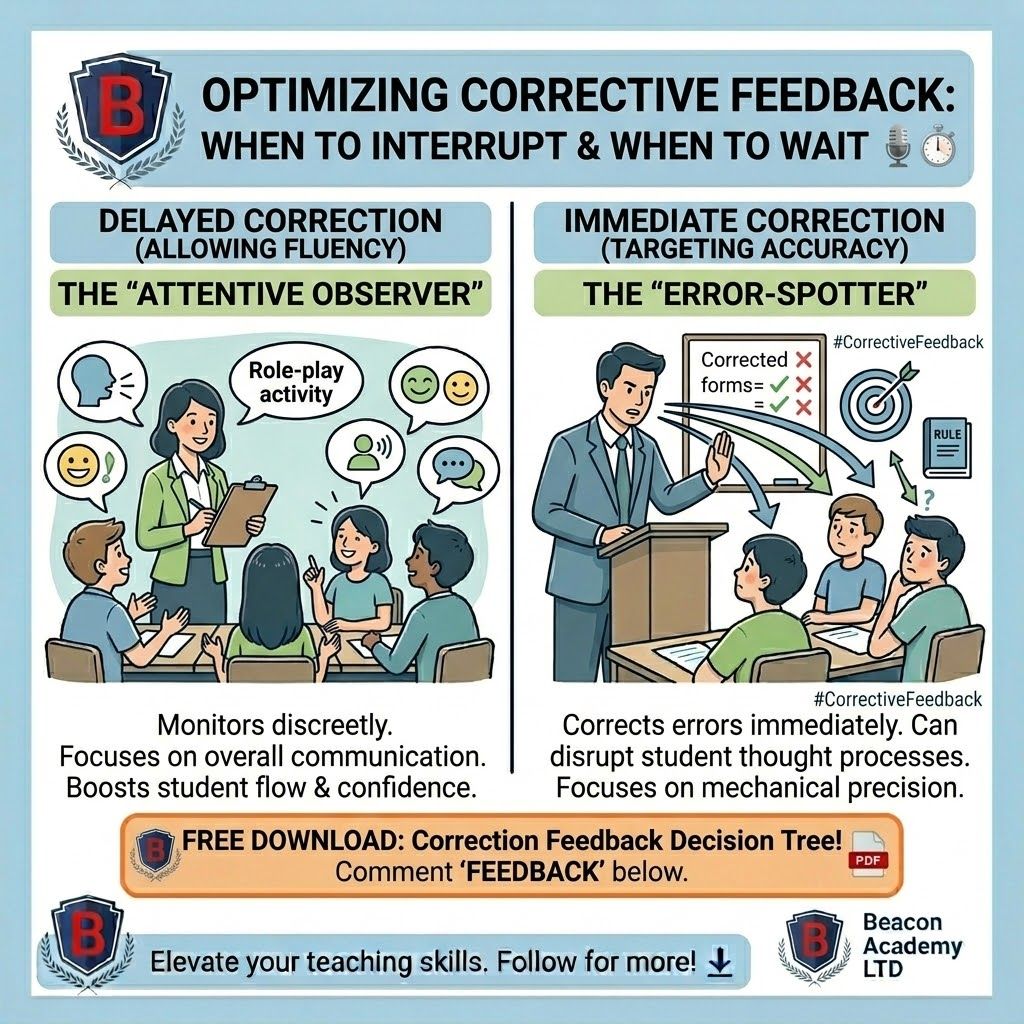
1. Delayed Correction: Note common mistakes discretely and address them after the activity, focusing on patterns, not individuals.
2. Recasting: Gently repeat a student’s sentence correctly with a question, prompting them to self-correct, e.g., “Ah, interesting! So you went to the park? Then what happened?”
3. Peer Feedback: Teach students how to give constructive, positive feedback to each other.
Let’s hear from you:
What’s the most effective feedback technique you use to encourage speaking in your classroom? Share your advice in the comments below and help inspire our community of educators! 👇 📚





“I couldn’t agree more! I always use delayed correction. I write down common slips on the board at the end of the lesson without mentioning names, and we correct them together as a class. It keeps the pressure off.”
It empowers self development and helps achieving set gola.