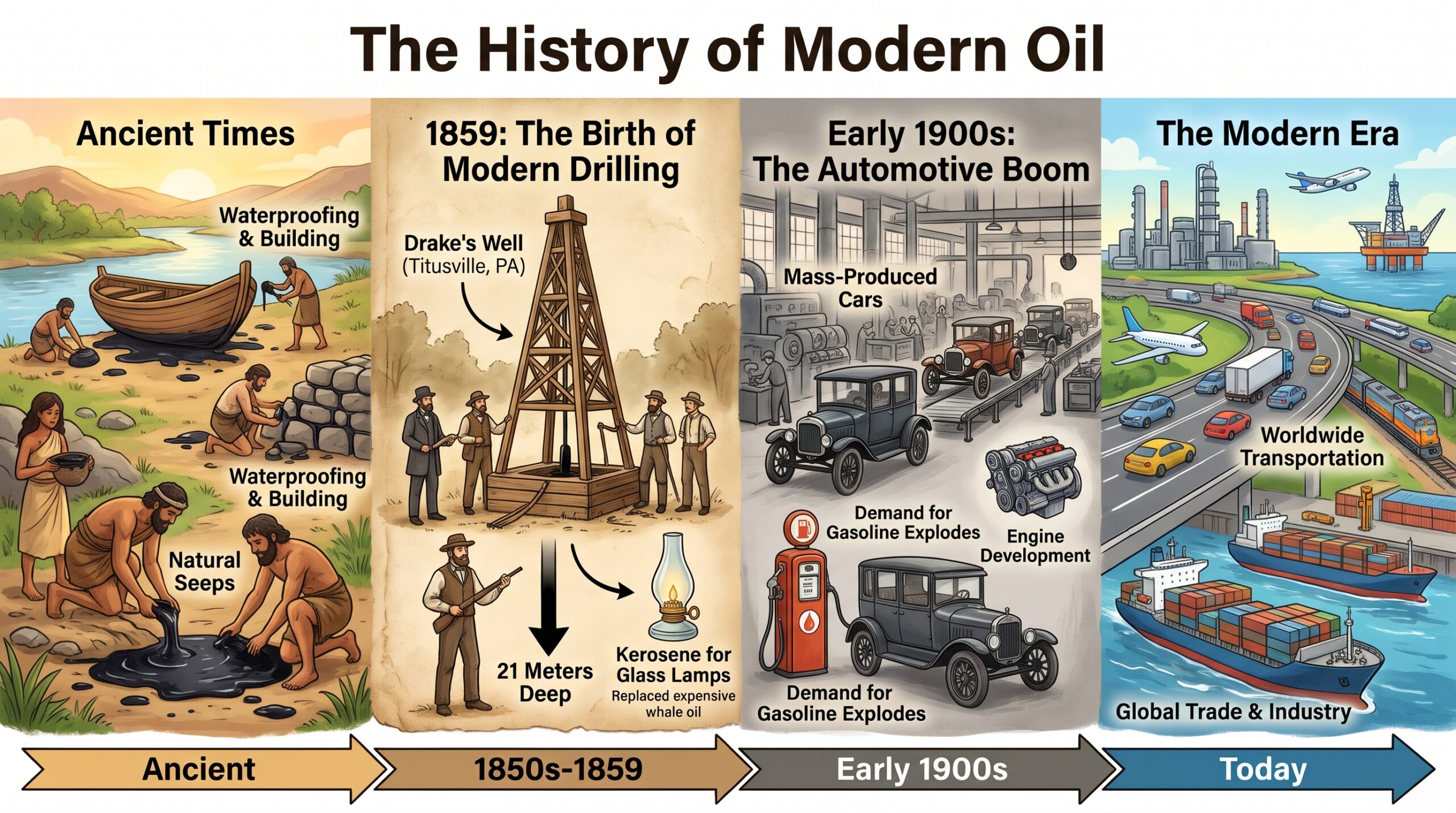
Humans have known about surface petroleum for thousands of years. In ancient times, people collected black asphalt that seeped out of the ground to waterproof wooden boats, glue stones into walls, and prepare simple torches for light. However, the modern petroleum industry officially began in the middle of the nineteenth century.
In the 1850s, people needed a reliable fuel to burn in glass lamps for indoor lighting. Whale oil was popular, but it was getting very expensive as whales became scarce. In 1859, a man named Edwin Drake drilled a successful well in Titusville, Pennsylvania, in the United States. He struck oil at a depth of about twenty-one meters. This success proved that people could drill deep into the ground to collect large amounts of crude oil.
Soon after Drake’s discovery, refineries began producing kerosene for household lamps. A few decades later, inventors developed the internal combustion engine and built the first gasoline-powered cars. When Henry Ford started building affordable cars in large factories, the global demand for oil exploded. Today, petroleum remains a major driver of world transportation, global trade, and modern industrial development.