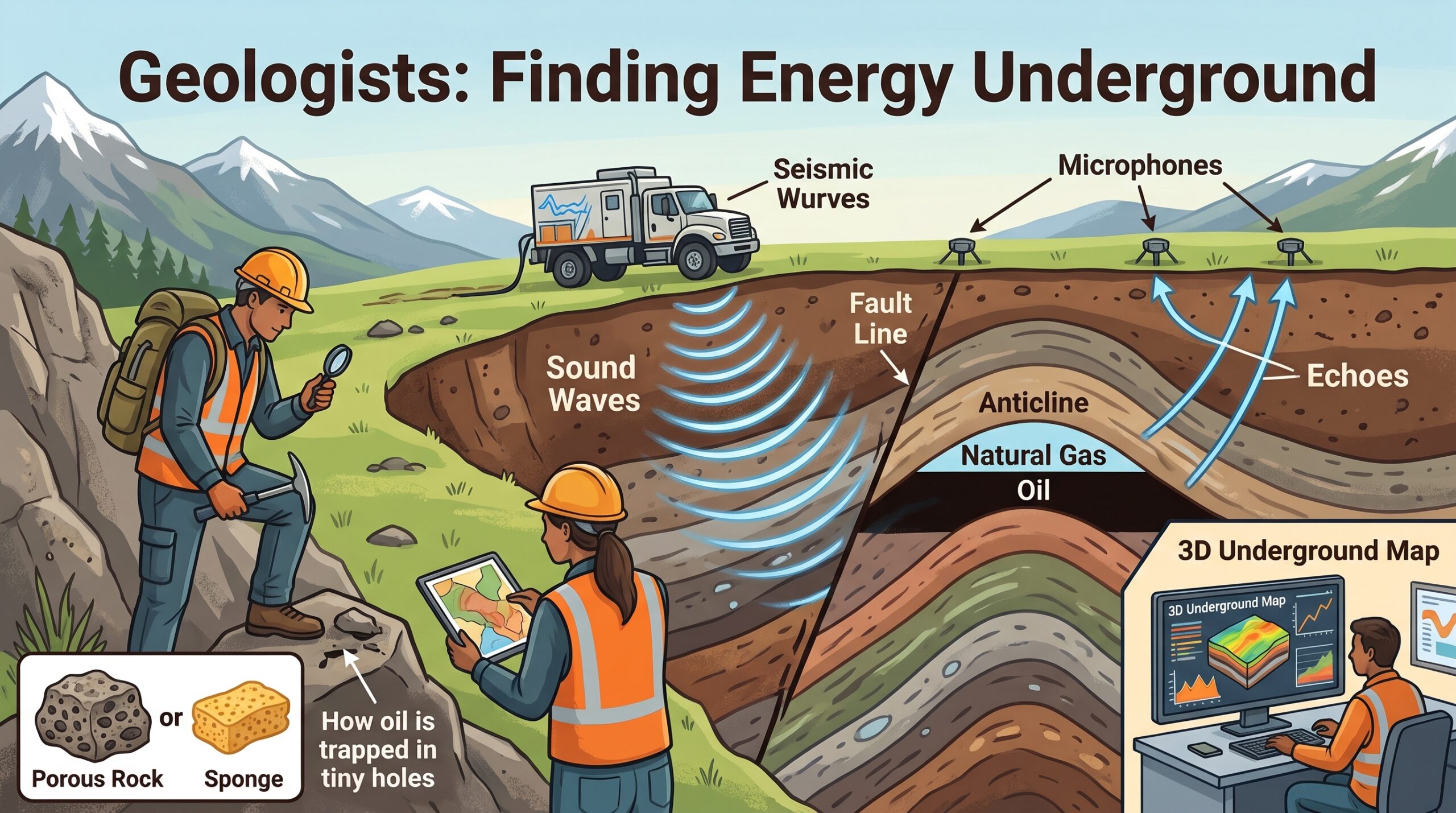
A geologist is a scientist who studies rocks, soil, and the history of the Earth. In the energy industry, petroleum geologists have an exciting mission: they search for hidden oil and natural gas trapped miles underground. Oil is not found in giant open underground caves. Instead, it hides inside tiny holes within porous rocks, much like water trapped inside a kitchen sponge.
To find these hidden energy deposits, geologists do not simply dig random holes in the ground. They study maps, examine rock samples from mountains, and use modern sound technology called seismic surveying. During a seismic survey, specialized heavy trucks or small controlled sound waves send vibrations deep into the Earth.
These sound waves travel through rock layers and bounce back up to the surface. Sensitive microphones record the echoes. Geologists load this data into powerful computers to build detailed three-dimensional maps of the underground rock layers. If the map shows a rock structure capable of trapping oil—such as an anticline or a fault line—the team marks the spot. Thanks to geologists, energy companies know exactly where to drill safely without wasting time and resources.