Cybersecurity – Protecting Your Digital World The Big Idea We live in an interconnected world where banking, shopping, education, and healthcare happen online. While this digital lifestyle offers great convenience, it also attracts digital criminals known as hackers. Cybersecurity is the science and practice of defending computer systems, networks, mobile devices, and sensitive data from unauthorized digital attacks and theft. How It Works Cybersecurity specialists use multiple layers of defense to keep information safe. One essential tool is encryption. Encryption scrambles readable data into secret code using complex mathematical formulas. Only someone with the correct digital key can decode and read the information. When you buy something online, encryption ensures that thieves cannot steal your credit card details while they travel across the network. Another core layer is the firewall. A firewall acts like a security guard standing at the door of a private building. It inspects all incoming and outgoing network traffic and blocks any suspicious or unauthorized data packets. In addition, cybersecurity relies on multi-factor authentication (MFA). MFA requires users to prove their identity in two or more ways—such as entering a password and then typing a temporary code sent directly to their personal smartphone. Why It Matters Cyberattacks can shut down hospitals, steal personal identities, or disrupt electrical grids. Understanding cybersecurity helps regular users recognize phishing emails, choose strong passwords, and protect their privacy in an increasingly connected world. Key Vocabulary Encryption: Scrambling data into code so only authorized parties can read it. Firewall: A software or hardware barrier that filters incoming and outgoing network traffic. Phishing: A scam where hackers disguise themselves as trustworthy entities to steal passwords.

The Big Idea

We live in an interconnected world where banking, shopping, education, and healthcare happen online. While this digital lifestyle offers great convenience, it also attracts digital criminals known as hackers. Cybersecurity is the science and practice of defending computer systems, networks, mobile devices, and sensitive data from unauthorized digital attacks and theft.

How It Works

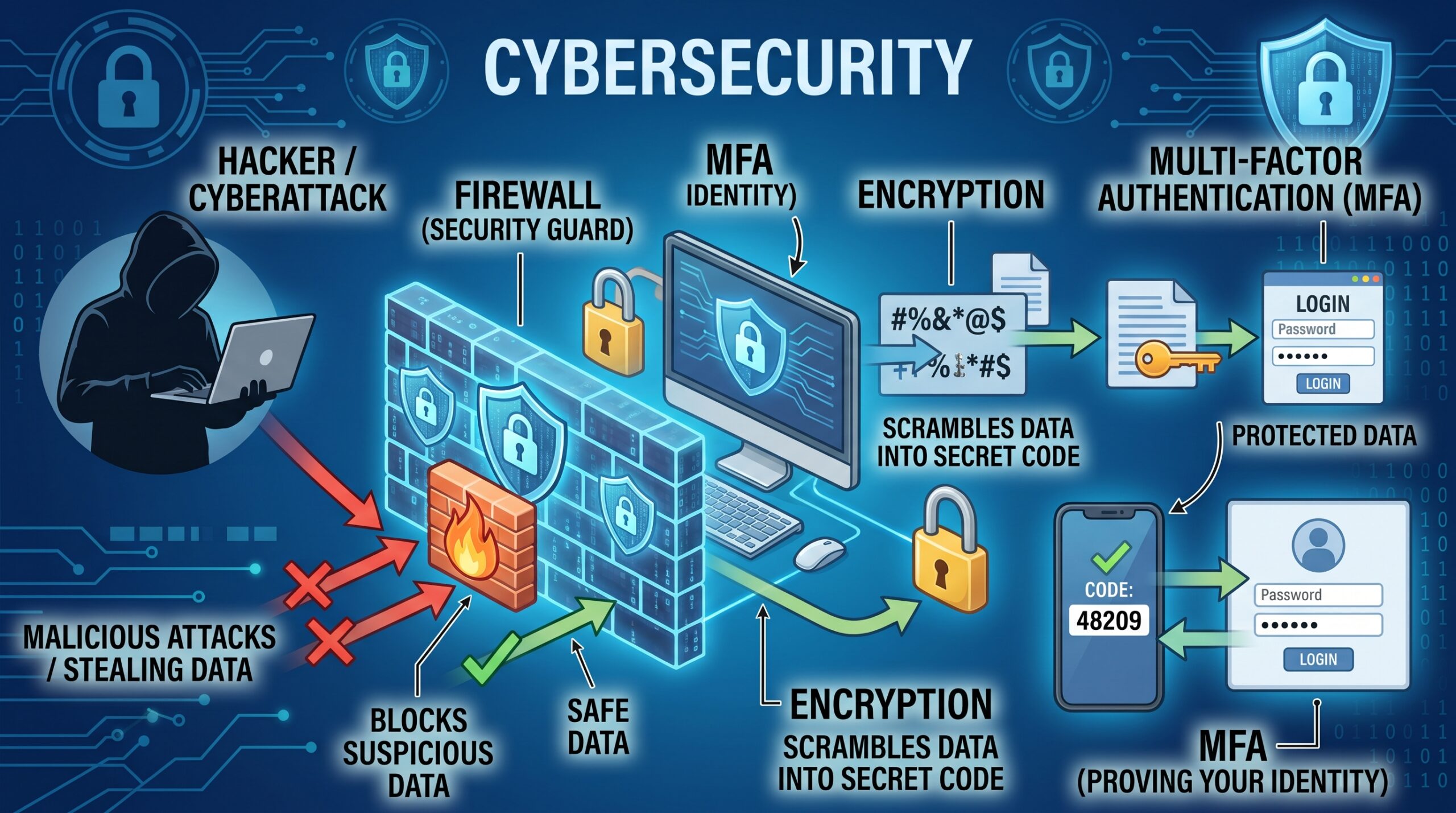
Cybersecurity specialists use multiple layers of defense to keep information safe. One essential tool is encryption. Encryption scrambles readable data into secret code using complex mathematical formulas. Only someone with the correct digital key can decode and read the information. When you buy something online, encryption ensures that thieves cannot steal your credit card details while they travel across the network.

Another core layer is the firewall. A firewall acts like a security guard standing at the door of a private building. It inspects all incoming and outgoing network traffic and blocks any suspicious or unauthorized data packets. In addition, cybersecurity relies on multi-factor authentication (MFA). MFA requires users to prove their identity in two or more ways—such as entering a password and then typing a temporary code sent directly to their personal smartphone.

Why It Matters

Cyberattacks can shut down hospitals, steal personal identities, or disrupt electrical grids. Understanding cybersecurity helps regular users recognize phishing emails, choose strong passwords, and protect their privacy in an increasingly connected world.

Key Vocabulary

  • Encryption: Scrambling data into code so only authorized parties can read it.
  • Firewall: A software or hardware barrier that filters incoming and outgoing network traffic.
  • Phishing: A scam where hackers disguise themselves as trustworthy entities to steal passwords.

Leave a Comment