The Big Idea
When you click a link or send a text message on your smartphone, information travels across the planet in just a fraction of a second. It feels like magic, but the internet is actually a massive physical network of connected computers, routers, and cables. It is the largest engineering machine ever built by humanity.
How It Works
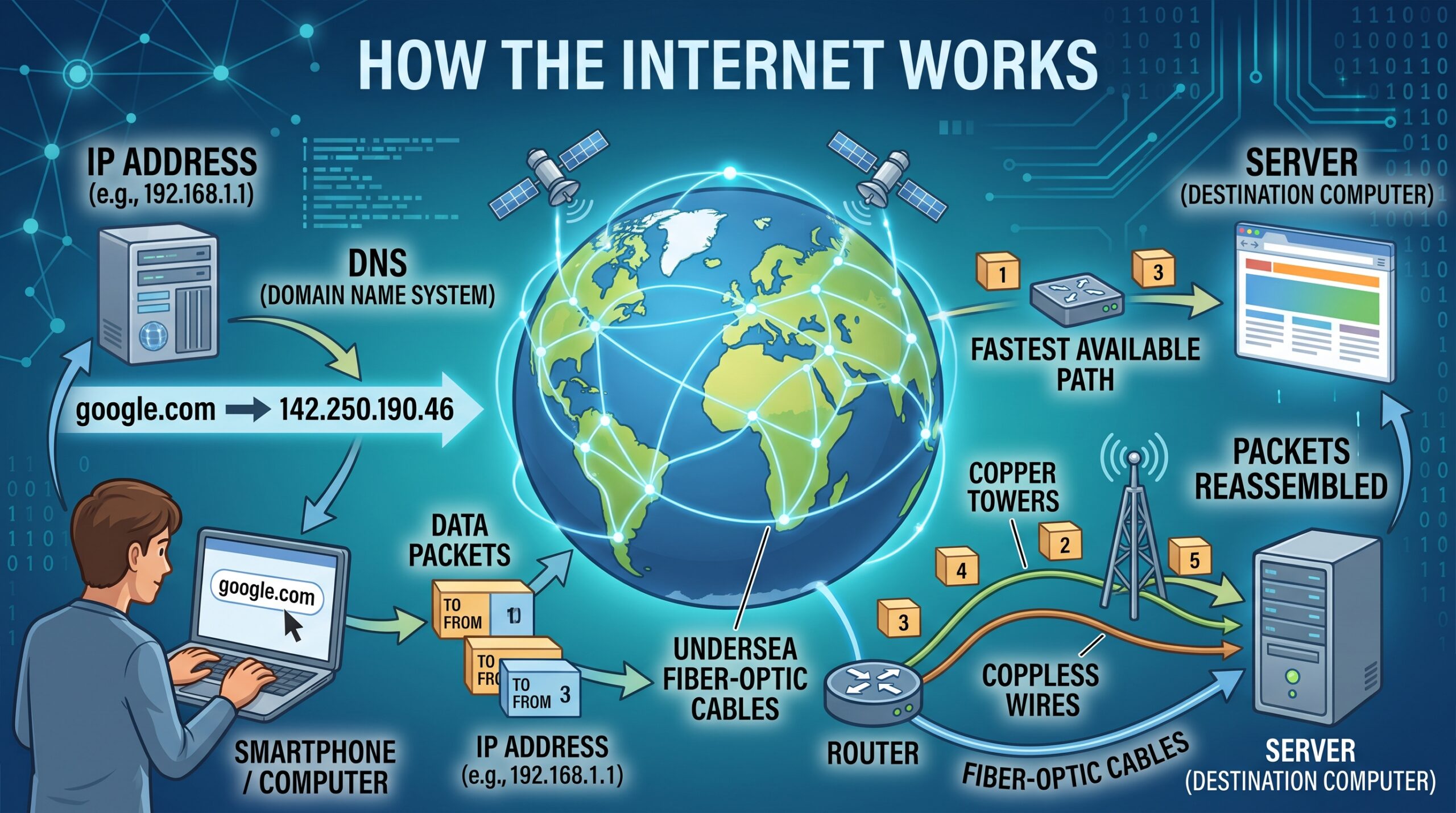
Every device connected to the internet—your computer, tablet, or phone—has a unique digital address called an Internet Protocol (IP) address. An IP address works just like your home mailing address. When you want to visit a website, your web browser sends out a request. Since humans remember words better than numbers, a system called DNS (Domain Name System) translates website names like “google.com” into the correct numerical IP address.
Your message does not travel as one single heavy block. Instead, communication protocols break your data down into tiny pieces called packets. Each packet contains a small piece of your message, along with the sender and destination addresses. These packets travel across copper cables, fiber-optic lines made of glass, and wireless radio towers. Routers act like digital traffic officers, directing each packet along the fastest available path. When all the packets reach the destination computer, they are reassembled into the complete web page or video.
Why It Matters
The internet connects billions of people, enabling global commerce, digital education, scientific research, and real-time communication. Engineers constantly work to increase bandwidth and lay undersea fiber cables across oceans so data moves safely and quickly.
Key Vocabulary
- IP Address: A unique numerical label given to every device on a computer network.
- Packet: A small unit of digital data sent across a computer network.
- Router: A networking hardware device that directs data packets to their destinations.