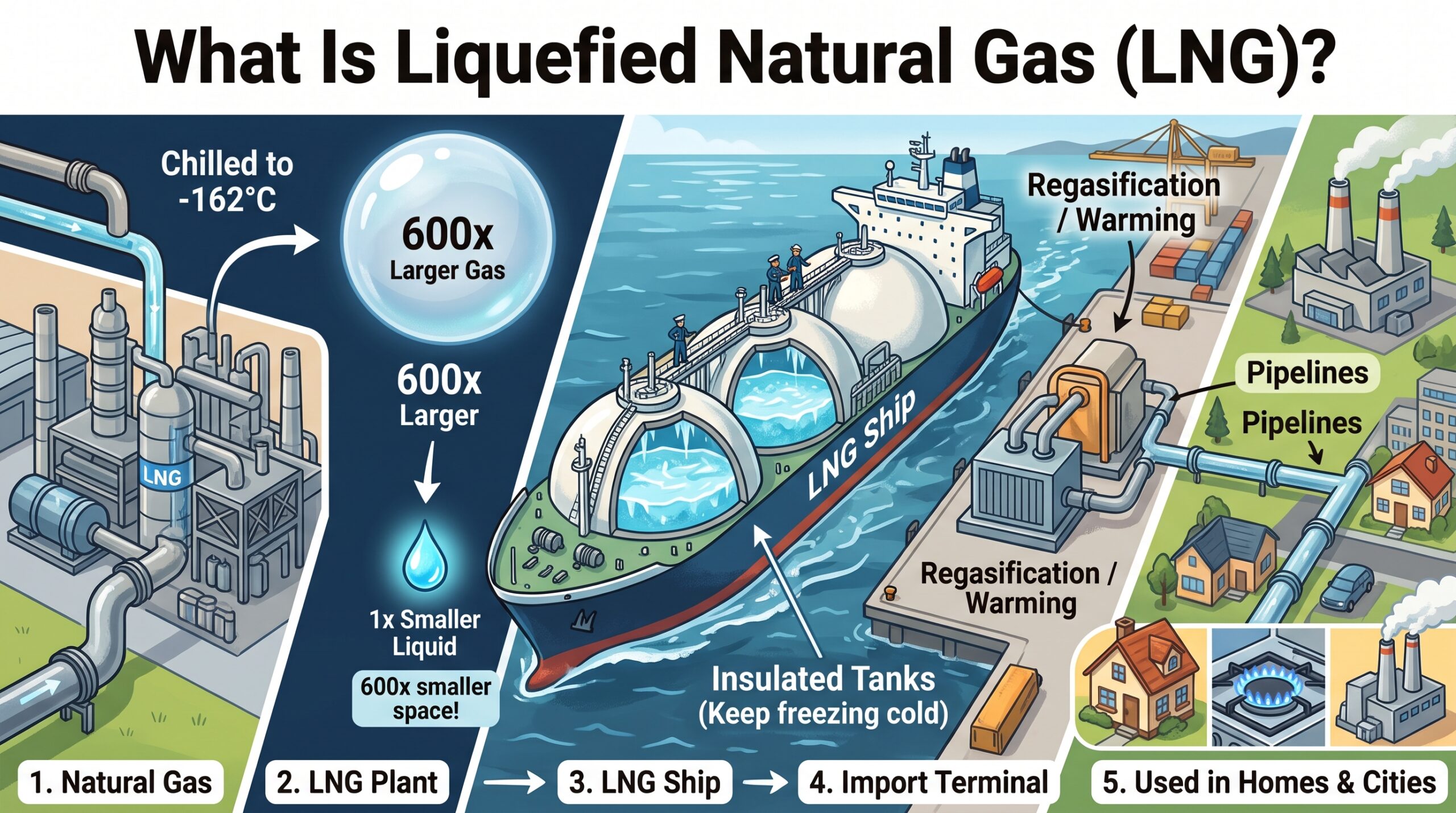
Natural gas is an excellent source of energy, but moving it across wide oceans can be difficult. You cannot easily load invisible gas into a normal cargo ship because gas expands to take up huge amounts of space. To solve this problem, energy engineers use a clever process to turn the gas into a liquid called Liquefied Natural Gas, or LNG.
To make LNG, a specialized processing plant cleans the natural gas and chills it down to minus 162 degrees Celsius. At this freezing temperature, the gas condenses into a clear, odorless liquid. The most amazing part of this transformation is the size change. When natural gas turns into a liquid, it takes up 600 times less space than before.
This massive reduction in volume allows companies to load LNG into specialized transport ships. These ships have giant, insulated spherical or membrane tanks that act like enormous thermoses to keep the liquid freezing cold during the voyage. When the ship arrives at its destination port, an import terminal warms the LNG back into natural gas. The gas then enters local pipelines to heat homes, cook food, and generate electricity.