In the evolving educational landscape of 2026, the traditional large-scale school model is being challenged by a highly adaptable, localized alternative: the Micro-School. This “decentralized school” approach prioritizes small learning communities, personalized curriculum, and deep community integration, offering a potent model for educational equity and innovation.
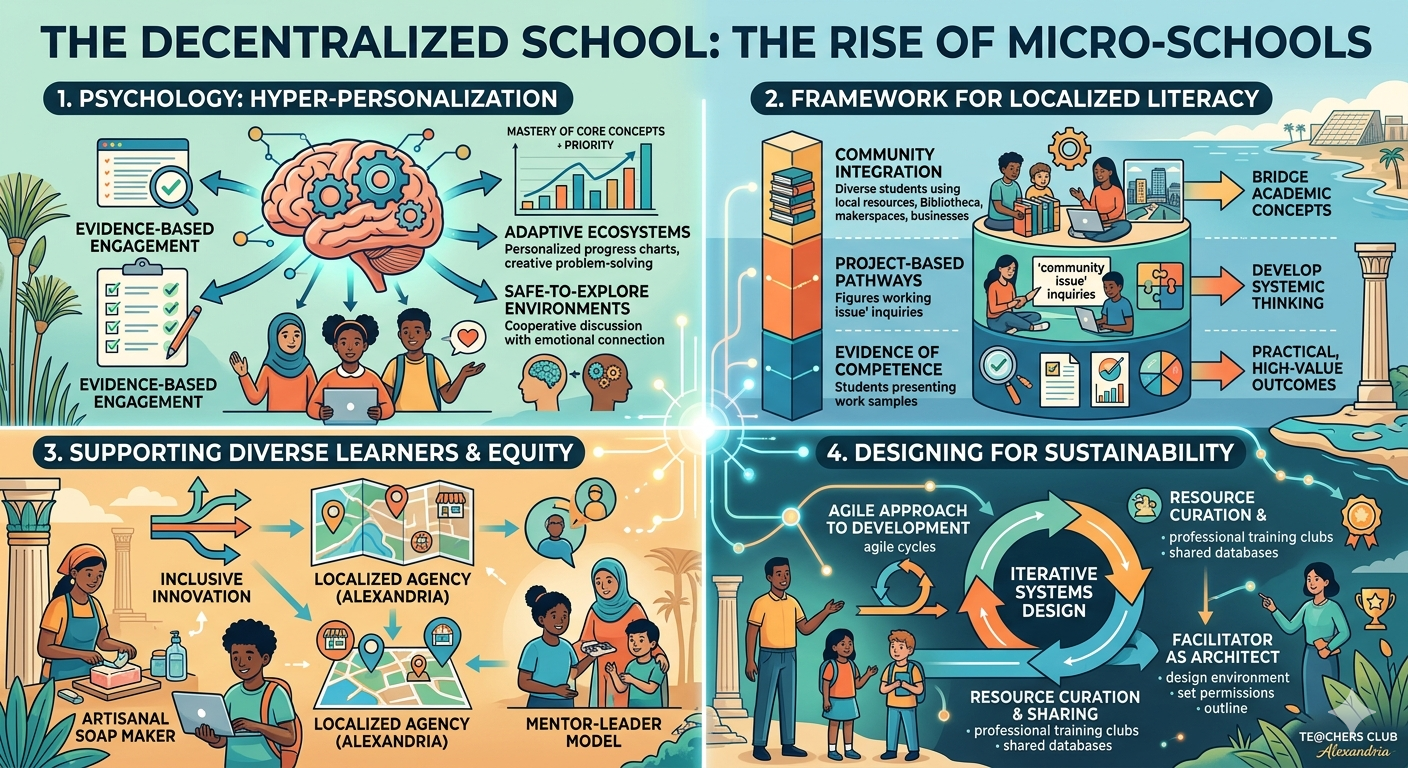
1. The Psychology of Hyper-Personalization
Micro-schools leverage the principles of hyper-personalization, recognizing that learning is optimized when tailored to the individual cognitive and emotional needs of each student.
- Evidence-Based Engagement: By moving beyond one-size-fits-all models, educators can focus on deep, observable engagement and mastery of core concepts.
- Adaptive Learning Ecosystems: Small group sizes allow for rapidly adapting curriculum based on real-time feedback, fostering cognitive flexibility and a growth mindset.
- Safe-to-Explore Environments: The close-knit nature of micro-schools provides emotional security, encouraging intellectual risk-taking and authentic self-expression.
2. Framework for Localized Educational Literacy
| Analytical Lens | Practice | Pedagogical Goal |
| Community Integration | Utilizing local resources (libraries, makerspaces, businesses). | Bridge academic concepts with real-world, localized experience. |
| Project-Based Pathways | Designing student-led inquiries around specific community issues. | Develop systemic thinking and complex problem-solving abilities. |
| Evidence of Competence | Validating skills through student portfolios and community exhibitions. | Shift from high-stakes testing to practical, high-value outcomes. |
3. Supporting Diverse Learners and Equity
Decentralized micro-schools offer unique pathways for equity, allowing communities to build educational models that honor their unique cultural and linguistic identities.
- Localized Agency (Alexandria): In the context of Alexandria, micro-schools can tailor curriculum to reflect local heritage and languages, empowering youth and fostering pride.
- Inclusive Innovation: Small, flexible structures provide equitable entry points for diverse academic tracks, and special needs supports can be tailored effectively.
- Mentor-Leader Model: Educators act as coaches and mentors, guiding students to become self-directed leaders within their learning journeys.
4. Designing for Sustainability
To make micro-schools a sustainable force in the educational system, they must transition from experimental models to robust, professional networks.
- Iterative Systems Design: Micro-schools adopt an agile approach to development, continually testing new teaching methods and optimizing curriculum structure.
- Resource Curation & Sharing: Professional training clubs, like the TE@CHERS Club in Alexandria, serve as hubs for resource sharing and collective training for facilitators.
- The Facilitator as Architect: Successful micro-schools treat the facilitator as the architect of the environment, responsible for setting permissions, structuring initial outlines, and designing the overall learning experience.
Reflection
A micro-school is more than a small classroom; it is an act of community design. What is one specialized skill—perhaps related to local heritage, digital media, or artisanal creation—that a decentralized micro-school in your area could curate to provide immediate, high-value competency to its students?