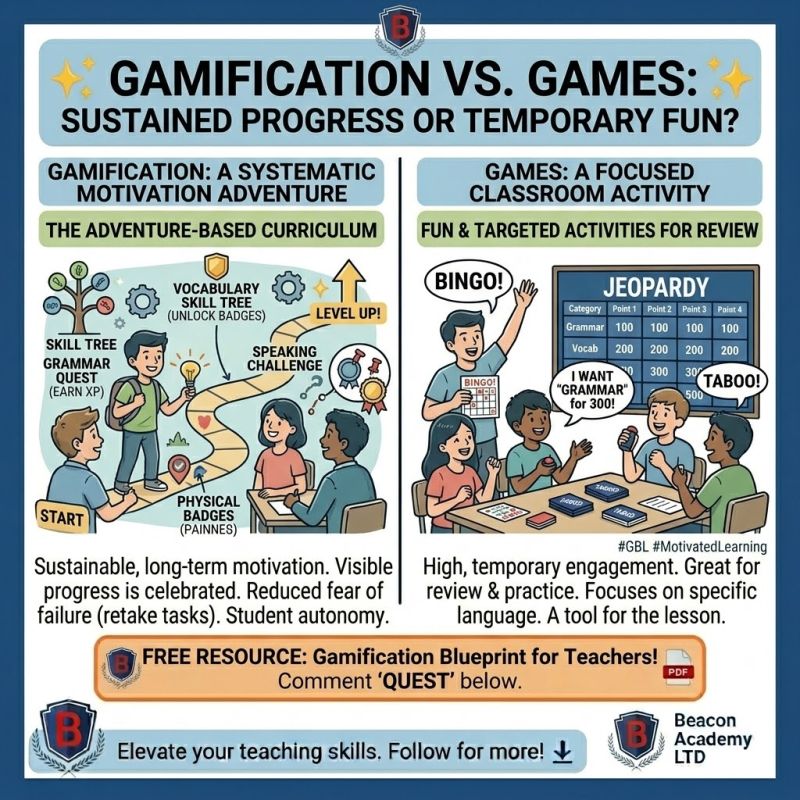
It’s a common sight in the ELT classroom: a high-energy game of “Bingo” or “Jeopardy” to wrap up a Friday afternoon. The students are laughing, the energy is high, and everyone is having fun.
But here is the question: Are you playing a game, or are you gamifying the learning process? While they sound similar, understanding the difference is the key to moving from temporary engagement to long-term motivation.
The Breakdown: Know the Difference
– Games (GBL – Game-Based Learning): This is using a specific game to teach a specific skill.
Example: Playing “Taboo” to practice description and synonyms.
Result: High engagement for 20 minutes, then the energy resets when the game ends.
– Gamification: This is the application of game mechanics to a non-game environment—your entire curriculum.
Example: Students earn “Experience Points” (XP) for homework, “level up” after a successful test, or unlock “badges” for consistent participation.
Result: Sustained, long-term motivation that turns the entire semester into a “quest.”
Why Gamification Wins in the Long Run:
1. The Progress Principle: In a game, you always know how close you are to the next level. Gamification makes the “invisible” progress of language learning visible.
2. Safe Failure: In a game, if you lose a life, you just try again. Gamifying your grading (shifting from “losing marks” to “earning points”) reduces the fear of mistakes.
3. Autonomy: Giving students “Side Quests” (optional extra-credit tasks) allows them to take ownership of their learning path.
4. The Shift: You don’t need fancy software to gamify. You just need a scoreboard, a clear set of “achievements,” and a shift in how you frame progress.