In a world where every purchase acts as a vote for the type of society we want to live in, teaching “Ethical Consumerism” has become an essential cross-curricular endeavor. By bridging economics, environmental science, and social studies, educators can guide students to understand the full lifecycle of their consumption choices, from raw material extraction to final waste.
1. The Psychology of Consumption
Ethical consumerism requires a shift from viewing shopping as a passive, individual act to understanding it as a complex, interconnected social behavior.
- The Transparency Gap: Most consumers are disconnected from the social and environmental costs embedded in the products they buy. By studying the supply chains behind goods like honey or handmade products, students begin to bridge this gap.
- Values-Driven Decision Making: Integrating ethical considerations into consumer choices helps students align their purchasing habits with their personal beliefs and community values.
- Cognitive Dissonance: Students often experience discomfort when their desire for a product conflicts with their knowledge of its unethical origins; this “dissonance” is a prime teaching moment for fostering critical reflection.
2. Framework for Ethical Inquiry
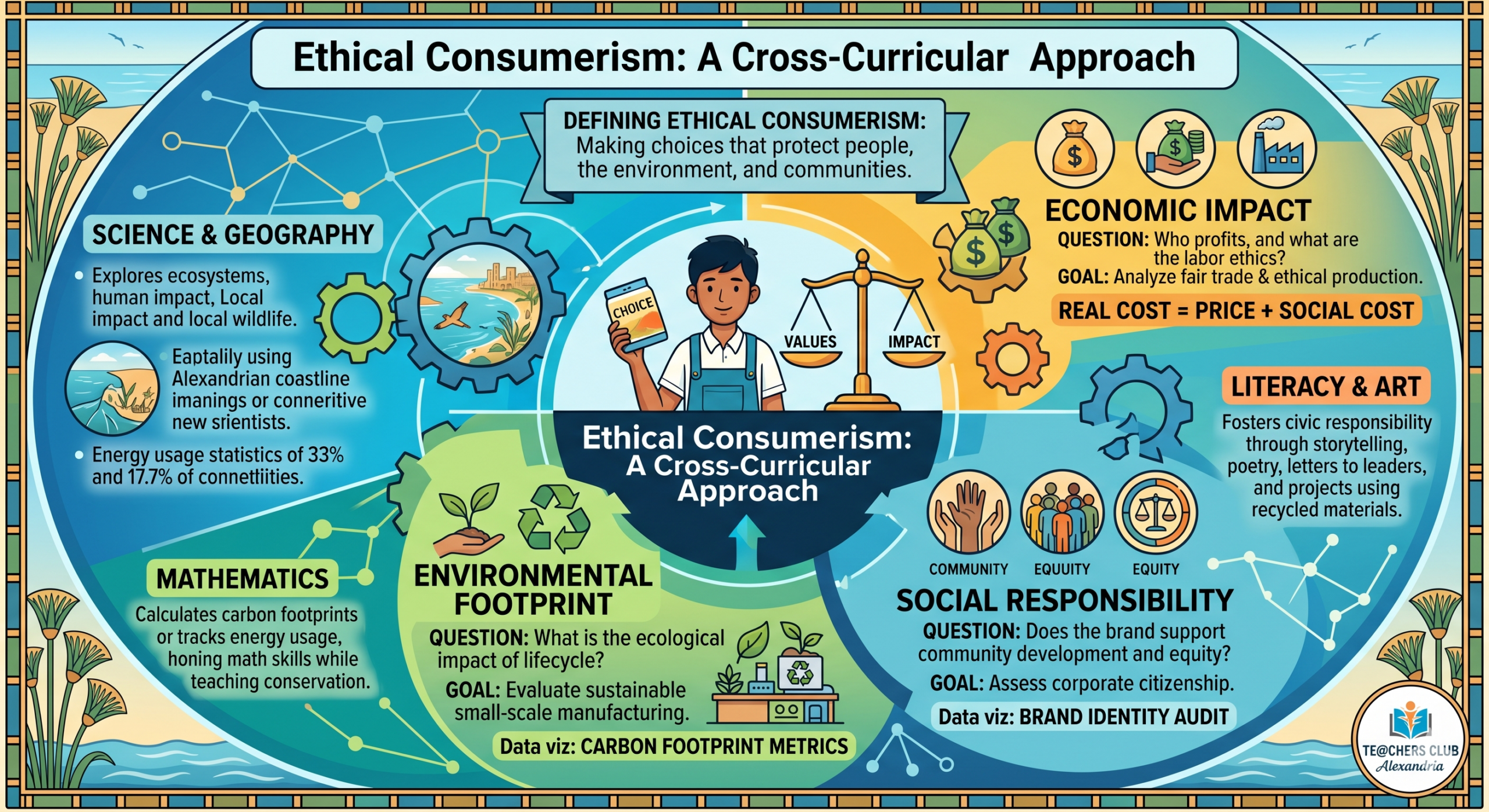
| Learning Pillar | Investigative Question | Pedagogical Goal |
| Economic Impact | Who profits from this product, and at what cost to labor? | Analyze fair trade practices and the ethics of production. |
| Environmental Footprint | What is the ecological impact of production and shipping? | Evaluate sustainable methods in small-scale manufacturing. |
| Social Responsibility | Does the company support community development or equity? | Assess how brands contribute to social well-being and education. |
3. Supporting Diverse Learners
A cross-curricular approach to ethical consumerism ensures that learning is inclusive and relevant to students’ lived experiences in places like Alexandria.
- Contextual Relevance: By focusing on local, small-scale ventures—such as natural product manufacturing—students can see the direct impact of ethical choices in their own community.
- Project-Based Empowerment: Students can apply their learning by helping to define the scope of ethical projects, such as sourcing pure ingredients for artisanal goods.
- Skill-Building for Future Roles: Engaging in these inquiries prepares students to take on professional roles as creative directors and business developers with a focus on ethical entrepreneurship.
4. Designing for Sustainability
Making ethical consumerism a lasting habit requires embedding it into the structural fabric of the classroom and beyond.
- Iterative Learning: Treat ethical sourcing as a continuous improvement process, much like refining a WooCommerce sales funnel for a natural products store.
- Community Leadership: Encourage students to share their findings through community-focused platforms, such as a podcast series or a leadership club, to amplify their impact.
- Holistic Evaluation: Move beyond simply measuring sales; evaluate the ethics of the brand identity and the sustainability of the production methods used in projects.
Reflection
Ethical consumerism transforms the act of buying into an act of leadership. What is one product students use regularly that you could use as a starting point to map its entire journey—from the resources it consumes to the ethical impact of its production—in your next cross-curricular unit?