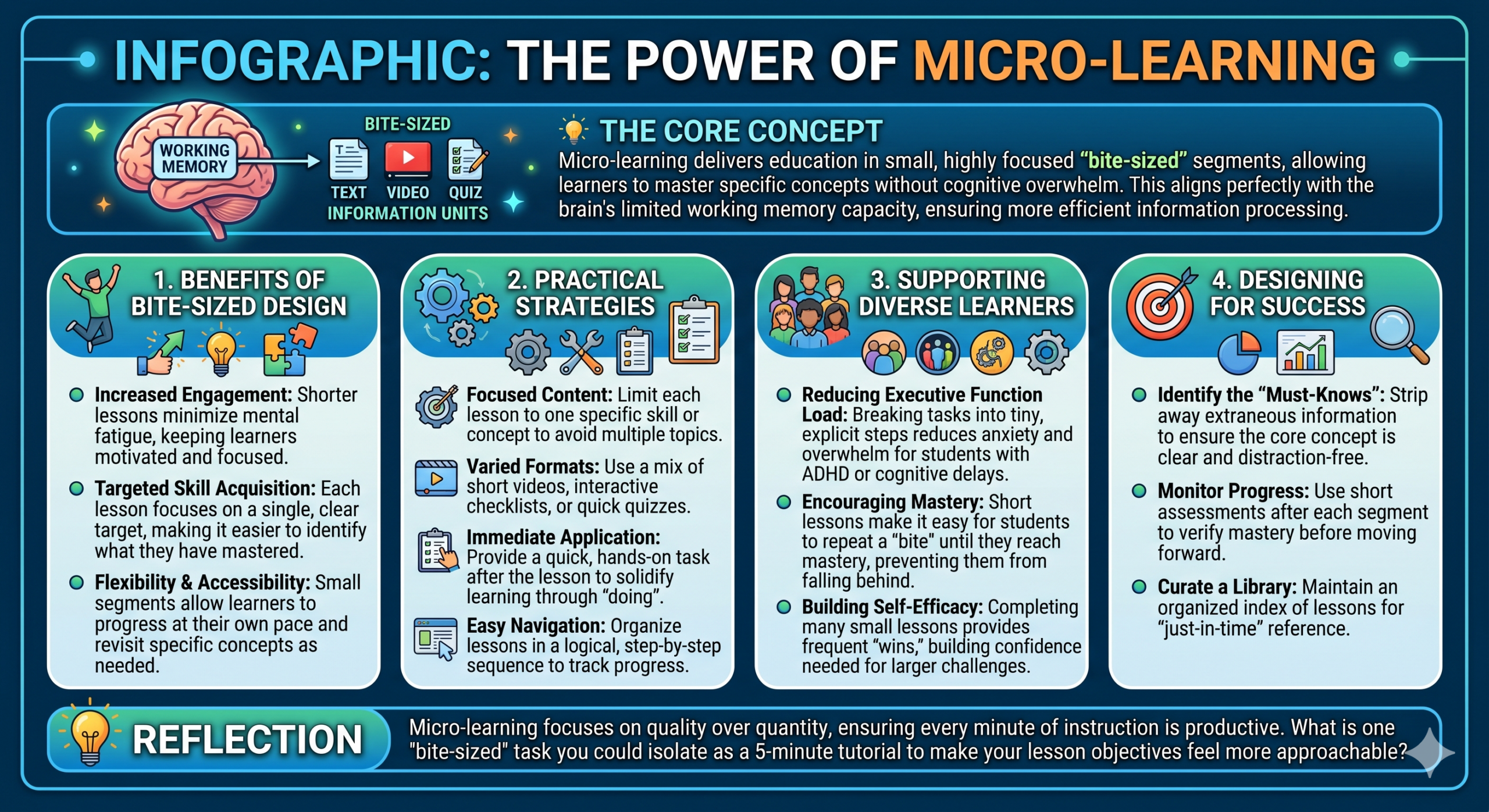
Micro-learning involves delivering educational content in small, highly focused “bite-sized” segments, allowing learners to master specific concepts without the cognitive overwhelm of longer lessons. This approach is particularly effective for aligning with the brain’s limited working memory capacity, ensuring that students can process information more efficiently.
1. The Benefits of Bite-Sized Design
Micro-learning transforms complex topics into manageable units, which increases the likelihood of long-term retention and application.
- Increased Engagement: Shorter lessons minimize the potential for mental fatigue, keeping students motivated and focused on the learning objective.
- Targeted Skill Acquisition: Each bite-sized lesson focuses on a single, clear learning target, making it easier for students to identify what they have mastered.
- Flexibility and Accessibility: Small segments allow students to learn at their own pace and revisit specific concepts whenever they need extra reinforcement.
2. Practical Strategies for Micro-Learning
| Strategy | Implementation Tip |
| Focused Content | Limit each lesson to one specific skill or concept (e.g., “How to create a header in WordPress”) rather than covering multiple topics at once. |
| Varied Formats | Use a mix of short videos, interactive checklists, or quick quizzes to keep the experience engaging across different learning styles. |
| Immediate Application | Provide a quick, hands-on task immediately after a lesson to help solidify the concept through “doing”. |
| Easy Navigation | Organize lessons in a logical, step-by-step sequence so students can easily see their progress and jump back to previous “bites” as needed. |
3. Supporting Diverse Learners
Micro-learning is a powerful tool for inclusivity, as it naturally accommodates different processing speeds and executive functioning needs.
- Reducing Executive Function Load: Breaking tasks into tiny, explicit steps reduces the anxiety and overwhelm that students with ADHD or cognitive delays often feel when faced with a large, undefined project.
- Encouraging Mastery: Because lessons are short, students can easily repeat a “bite” until they reach mastery, preventing the common issue of falling behind in a faster-paced curriculum.
- Building Self-Efficacy: Successfully completing many small lessons provides frequent “wins,” which builds the confidence students need to tackle more challenging topics.
4. Designing for Success
To make micro-learning effective, the content must be intentional and well-structured.
- Identify the “Must-Knows”: Strip away extraneous information to ensure the core concept of each “bite” is clear and free from distractions.
- Monitor Progress: Use short assessments after each segment to ensure students have mastered the content before they move on to the next one.
- Curate a Library: Maintain a well-organized index of lessons so that students can use them as a “just-in-time” reference tool when they need to revisit a specific technical step.
Reflection
Micro-learning is about quality over quantity, ensuring that every minute of instruction is focused and productive. In your courses for kids, what is one “bite-sized” task you could isolate as a 5-minute tutorial to make the lesson objectives feel more approachable for your students?