Inquiry-based instruction transforms the classroom into a dynamic environment where students move from being passive consumers of information to active investigators who construct their own understanding. This pedagogical approach centers learning on student-generated questions, investigations, and the discovery of answers.

1. The Inquiry Cycle

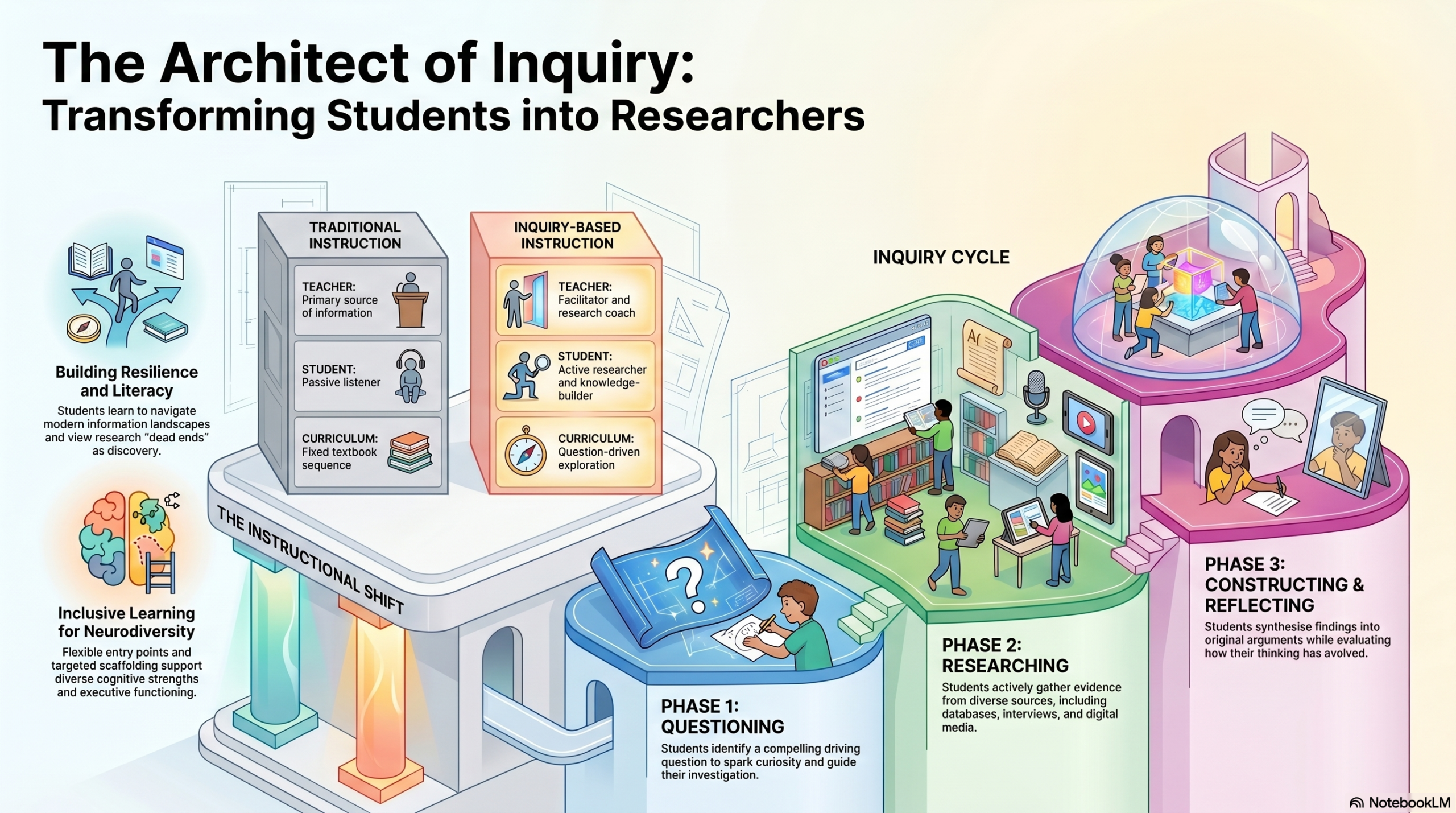
Inquiry-based instruction is not a random exploration; it is a structured cycle that mimics the scientific and scholarly process.

  • Questioning: Students begin by identifying a compelling “driving question” that sparks their curiosity and guides their investigation.
  • Researching: Students actively seek out evidence from diverse sources, such as databases, interviews, primary texts, or digital media.
  • Constructing: Based on their research, students synthesize their findings to create an original argument, solution, or explanation.
  • Reflecting: Students evaluate their own process—what worked, what didn’t, and how their original thinking has evolved through the process.

2. Transforming the Classroom Role

RoleTraditional InstructionInquiry-Based Instruction
TeacherPrimary source of informationFacilitator and research coach
StudentPassive listenerActive researcher and knowledge-builder
CurriculumFixed textbook sequenceQuestion-driven exploration

3. Benefits for Student Development

By framing students as researchers, educators develop the critical habits of mind necessary for future success in academic and professional fields.

  • High-Level Engagement: Students are more intrinsically motivated when they have a stake in the questions being asked.
  • Information Literacy: Students learn how to navigate the modern information landscape, evaluating sources for credibility and bias—a critical skill in a hyper-connected world.
  • Resilience: The inquiry process inherently involves “dead ends” and revisions, which helps students view failure as a normal part of discovery rather than a final judgment.

4. Supporting Neurodiverse Learners

Inquiry-based models are highly flexible, making them well-suited for diverse learning needs.

  • Multiple Entry Points: Inquiry allows students to explore topics through their preferred mediums—whether visual, written, oral, or technical—which honors different cognitive strengths.
  • Targeted Scaffolding: Teachers can provide specific “research templates,” graphic organizers, or curated resource lists to support students who struggle with organization or executive functioning.
  • Agency and Inclusion: By allowing students to pursue topics that genuinely interest them, inquiry-based instruction creates an inclusive environment where every student’s voice and perspective is valued.

Reflection

Turning students into researchers requires moving away from the need to “cover” all the content and toward the goal of “uncovering” the depth of a subject. What is one topic in your current educational curriculum that could be transformed into a driving question, prompting your students to conduct their own independent research instead of listening to a lecture?

Leave a Comment